
The General Who Got Away With Murder: The Scandalous Life of Daniel Sickles
How Daniel Sickles, master of PR and politician, painted himself as the hero of Gettysburg.
Daniel “Devil Dan” Sickles is one of the Civil War’s most divisive figures. A lifelong Democrat politician, Sickles saw a tremendous rise in his military stature. He joined the Union Army with no military experience and shot up through the officer ranks to become a corps commander, where he famously saw his corps decimated at the Battle of Gettysburg.
Major General Daniel Sickles was the only Union Army corps commander who didn’t hail from the United States Military Academy during the Civil War. It was his aptitude for politics, his lack of a West Point education, and his personal attacks on professional army officers that solidified his support from the Radical Republicans faction during the Civil War.
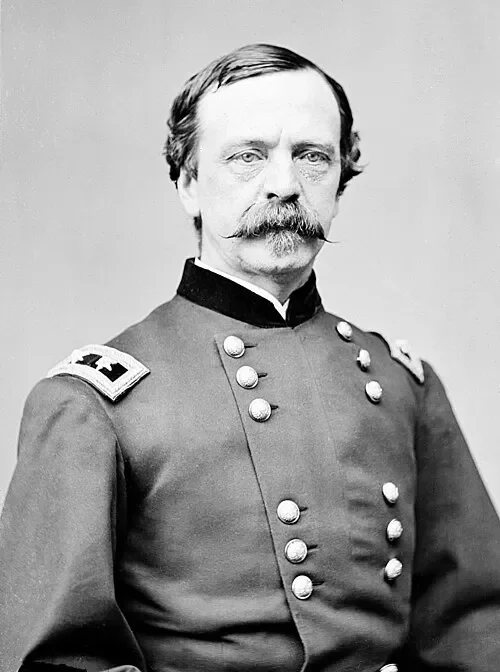
Daniel Sickles was a politician before the Civil War, rising to the rank of Major General.
In the post-war years, Sickles’ reputation has been put through the wringer. He attempted to claim hero status after the Battle of Gettysburg, promoting himself as the savior of the Union during the Civil War’s most fateful battle. More recent historical analysis has been less kind to Sickles, with most historians agreeing that his move on July 2, 1863, was dangerous, insubordinate, and overblown.
The general’s blatant insubordination at Gettysburg would have cost many a general their military career, or at least their reputation. Not Sickles, though. Drawing from his storied political career, the man used his manipulative skills to paint himself somehow as the hero of Gettysburg, while remaining a favorite of Washington’s wartime directors.
Want to get my newsletters straight to your inbox? Sign up here, where you can become a free, or paid subscriber.
First off, who was Daniel Sickles?
Saying Sickles was a man of questionable character may seem like an understatement. Especially if you know anything about his pre-war life as a civilian and politician.
Born in 1819 to a New York politician, Sickles was himself a lawyer by trade, but his career as an attorney was short-lived. Politics was his calling, along with treachery.
In the 19th century, New York, and especially New York City, was one of America’s most important political drivers. Many an American student who sat through history class has heard about New York’s infamous political machines, especially the legendary Tammany Hall. Political machines were the control centers for many political regions throughout the United States, with Tammany being one of the most powerful in the entire country. In 1844, Daniel Sickles fell into the Tammany orbit after passing the bar, officially becoming a New York lawyer.
For a man like Sickles, the Tammany machine was a perfect fit. The machine drove aggressive politics, a kind filled with questionable ethics, and valued the melodramatic performance associated with politicians.
It was a fitting apprenticeship for someone like Sickles, who would use the skills he picked up in New York politics to solidify his place in Civil War history.
In 1853, Sickles’ first major political appointment came at the hands of President James Polk. Polk picked him as secretary of the U.S. legation in London, serving as an assistant to Ambassador to England and future president James Buchanan.
This may seem like a random aside, but before we talk about Sickles’ political and military career, we need to talk about his marriage. In 1852, the then 32-year-old (almost 33) Daniel Sickles married a woman half his age. His young wife, either 15 or 16-year-old Teresa Bagioli was pregnant with their first child as Sickles shipped out for England to work alongside Buchanan.
19th-century sea travel was arduous, so Sickles having his young, pregnant wife stay home seems somewhat reasonable. Until you realize that instead of bringing his wife, or just making the trip alone, he brought a well-known prostitute named Fanny White with him to meet Queen Victoria of England.
Aside from the prostitute fiasco, Sickles publicly snubbed Queen Victoria during an Independence Day celebration (celebrating American independence) at the Star and Garter Inn. When the the party host, American financier George Peabody went to toast Queen Victoria, an irritated Sickles noisily slid back his chair and stormed out of the dinner. Apparently, he was irritated by what he saw as groveling by Americans at the feet of Queen Victoria.
He stepped it up a notch. Doing something that would become second nature to Sickles during his life, he reached out to the press. Using anonymous letters (something that is important evidence for the post-Gettysburg publicity stunt), he attacked both Peabody and James Buchanan.
Back in the U.S., after his time in England, the New York State Assembly censured Sickles for bringing his prostitute friend into the assembly chamber. That didn’t stop Sickles. In 1856, he was elected to represent New York in the United States Congress, where one of the most dramatic episodes of his life took place.
Sickles, who was known as a ladies’ man and serial philanderer, discovered his wife, Teresa, was having an affair with Philip Barton Key II. Key was the US Attorney for the District of Columbia and was the son of Francis Scott Key, writer of what would become the Star-Spangled Banner.
In broad daylight, Sickles followed Key to Lafayette Square, in the shadow of the White House, and murdered him. The very public murder should have been the end of Sickles. Instead, he became the first American to use the temporary insanity defense. Miraculously, he played the part of a jilted, distraught, ruined husband well enough to get away with murder.
During the trial, Sickles once again used the press to his advantage. He persuaded his wife to write a detailed confession, and it was then “leaked” to the press. His story became a national sensation, and the man who brought a prostitute to meet Queen Victoria, while his pregnant wife was back home, garnered sympathy from across the country. Letters of support poured in. Even President James Buchanan, who had once been a target of Sickles’ attacks in the media, sent a note of support.
After the trial, Daniel Sickles publicly “forgave” his wife for cheating, then “quietly” went back to his life in Congress.
Daniel Sickles and the Civil War: The Useful Democrat
Politics became an integral part of the Civil War. Men in the army had to play politics, along with the politicians. To win the war, recruit volunteers, gain political support, and finance the conflict, the Republican Lincoln Administration needed Democrat allies. This was the perfect opportunity for Daniel Sickles.
Sickles had a reputation to rebuild. After the murder of Key, he saw his opportunity when he garnered the approval and help of Tammany Hall to raise several New York units. He ultimately raised an entire battalion, the Excelsior Battalion, and was given command of the group.
Sickles’ formation of New York units, especially at the behest of Tammany Hall, made him a useful ally. His units were a public show of support for the war, and while everyone knew of Tammany’s dark reputation, their support was necessary to keep the war effort going.
Much has been said about “political” generals like Sickles in the post-war years, but they were a necessary evil. In a war driven by volunteers, the political appointees became an important catalyst for more recruits, better press, more political support, and Sickles rode his usefulness to command a corps.
Wartime politics gave Sickles an opportunity.
Radical Republicans became the loudest voice in American politics, pushing for a ruthless, complete victory for the Union. Radical Republicans did not allow negotiations. Only the total destruction of the Confederacy was acceptable.
These Radicals were extraordinarily skeptical of the Union Army’s professional officers. West Pointers were constantly in their crosshairs. Many were Democrats, against the desired total war and the abolition of slavery. While they wanted to preserve the Union, they didn’t see the need for this aversion to a negotiated peace.
The Radicals created the Joint Committee on the Conduct of the War, and any setback, defeat, or show of apprehension by professional officers was met with a public attack. Officers were accused of secret southern sympathies or purposely sabotaging the war effort.
The first major expansion of the Union Army took place under the command of General George B. McClellan, who became a perceived enemy of the Radical Republicans. George McClellan was a vocal Democrat, voicing support for a negotiated peace, and his cautious actions in the face of Confederate forces invited questions concerning his loyalty. McClellan was so beloved by his army and his officers that these Radicals constantly feared a loyalty to McClellan over the Union. McClellan ultimately ran as Lincoln’s opponent in the 1864 Presidential Election, using a negotiated peace as a major part of his platform.
Sickles met the criteria that gave him Radical Republican support. First, he wasn’t a professional West Point-trained officer. He was a vocal supporter of total victory and restoring the Union. Sickles refused to allow slave-hunters in his army camps who were looking for runaway slaves. Any slaves who crossed over he kept safe, giving them various jobs around his camp.
Sickles the Officer
Daniel Sickles’ tenure as an officer, early on, was unremarkable. He first saw action during the Peninsula Campaign, 1862, as a brigadier general commanding the Excelsior Brigade. His units fought admirably during the disastrous days of the campaign.
At the Battle of Fredericksburg, in late 1862, Sickles now held division command. He avoided the horrendous butchery around the Fredericksburg heights, but was thrust into action to relieve Confederate pressure, where his division was solid under fire.
The Battle of Chancellorsville, however, changed Sickles in a way that affected his actions at Gettysburg.
During the Battle of Chancellorsville, a Confederate flanking attack by Stonewall Jackson was mistaken for a retreat. Sickles, now a corps commander (commanding III Corps), requested that Army of the Potomac commander Joseph Hooker allow him to crush the retreating Confederates. Hooker approved, but Sickles wasn’t going after a rearguard of rebel soldiers. He left a gap in a key part of the Union line, walking into a dangerous situation as the Confederate assault kicked off.
Sickles was cut off. His men couldn’t get through to rejoin the main Union line, and a failed bayonet charge left him in a precarious position.
On May 3, 1863, unknown to Sickles, his army commander, Hooker, was knocked unconscious by a Confederate artillery explosion. A delirious Hooker grew increasingly anxious about the salient his army now formed, getting squeezed from all sides. His confidence was sapped.
Sickles held a key point of the Union line at Hazel Grove, where he held the high ground. He was all that held two pieces of Lee’s army from joining hands and pressing their attack. Providence looked down on Robert E. Lee that day as a dazed Joseph Hooker ordered Sickles to withdraw, hoping he could contract his line.
Sickles was incensed. He knew they were giving up important high ground, and he was right. He desperately opposed the withdrawal, but Hooker’s foggy mental state left him indisposed and forced Sickles to deal with various staffers instead. Obeying orders, Sickles pulled his line back. Confederate General Edwin Porter Alexander rushed his artillery to Hazel Grove and poured fire on the Union lines.
Sickles’ Infamous Gettysburg maneuvers
Daniel Sickles was haunted by his memory of Chancellorsville. His plan to avoid a repeat of Hazel Grove almost proved disastrous on Day 2 of the Battle of Gettysburg.
III Corps rushed to the aid of John Reynolds on July 1, 1863, once word of a battle reached Sickle’s HQ. By July 2, General George Meade’s famous fishhook was in place. Meade directed Sickles to tie his flank in with General Winfield Scott Hancock’s II Corps, where he would be the southernmost line on Meade’s left flank. Little Round Top anchored his left flank. But Sickles saw high ground ahead of him.
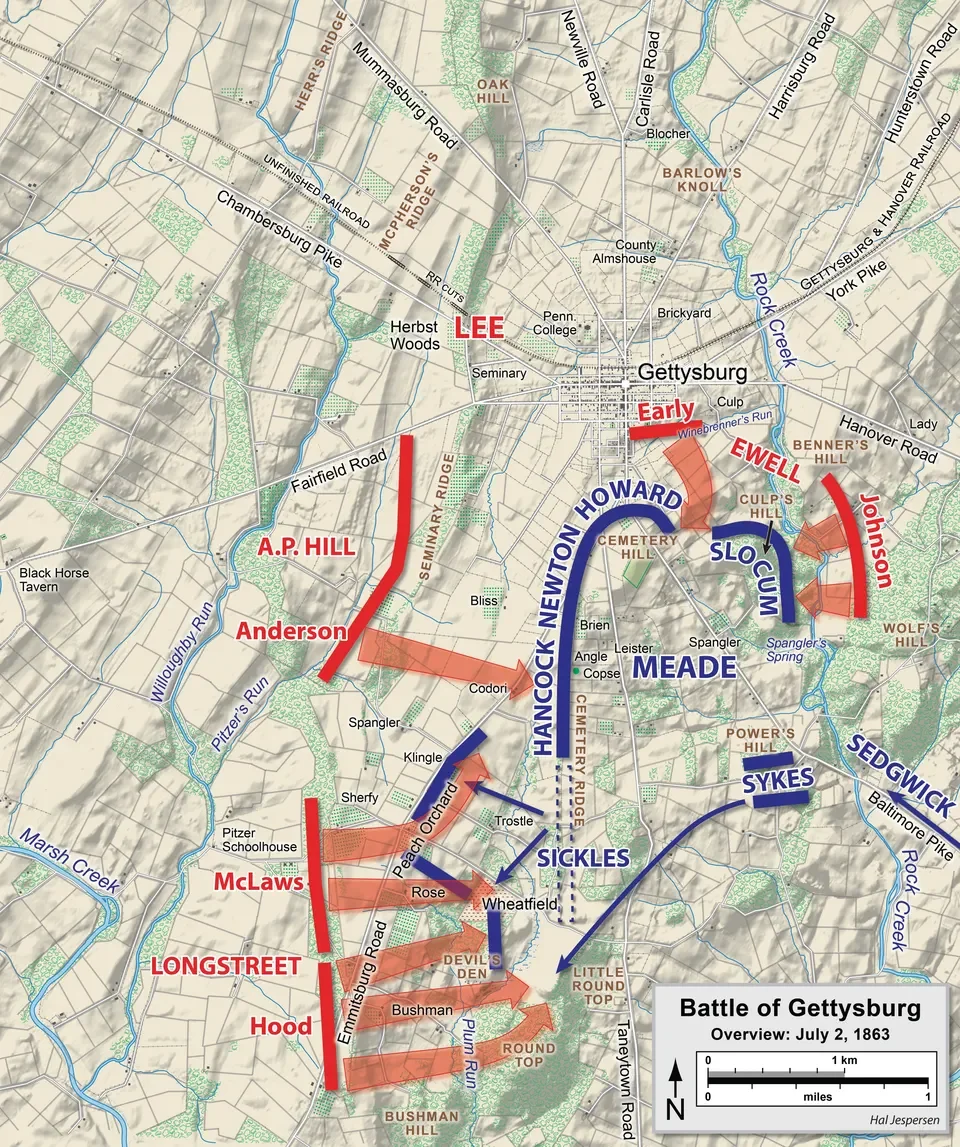
Sickles’ Corps on the Union left flank was the site of carnage, forever cementing these sites as legendary.
Image Credit: The American Battlefield Trust, Gettysburg Day 2.
The line Meade wanted Sickles to occupy was too low in Sickles’ opinion. Half a mile to his front, Sickles knew the ridge along the Emmitsburg Road was closer to the Confederate position. If they occupied it, like at Chancellorsville, the rebel forces could bring up their artillery and grind away at his men. He had to move. He sent multiple messages to Meade’s HQ, begging for permission to move to the higher ground, but Meade ordered him to stay put.
By the early afternoon, Union skirmishers bumped into a brigade of Confederate General Richard Anderson, just to the west of the Emmitsburg Road. Sickles’ fear was being realized; the Confederates were going to take the high ground.
Sickles moved his entire corps forward. The tip of the spear, his middle, ended up at the infamous Peach Orchard, three-quarters of a mile ahead of his ordered position. His right flank, which was to be tied in with Hancock, was half a mile away. His left ended up at Devil’s Den, far from Little Round Top, which was now left wide open. Sickles created a dangerous salient. Mid-afternoon, the heavy fighting began.
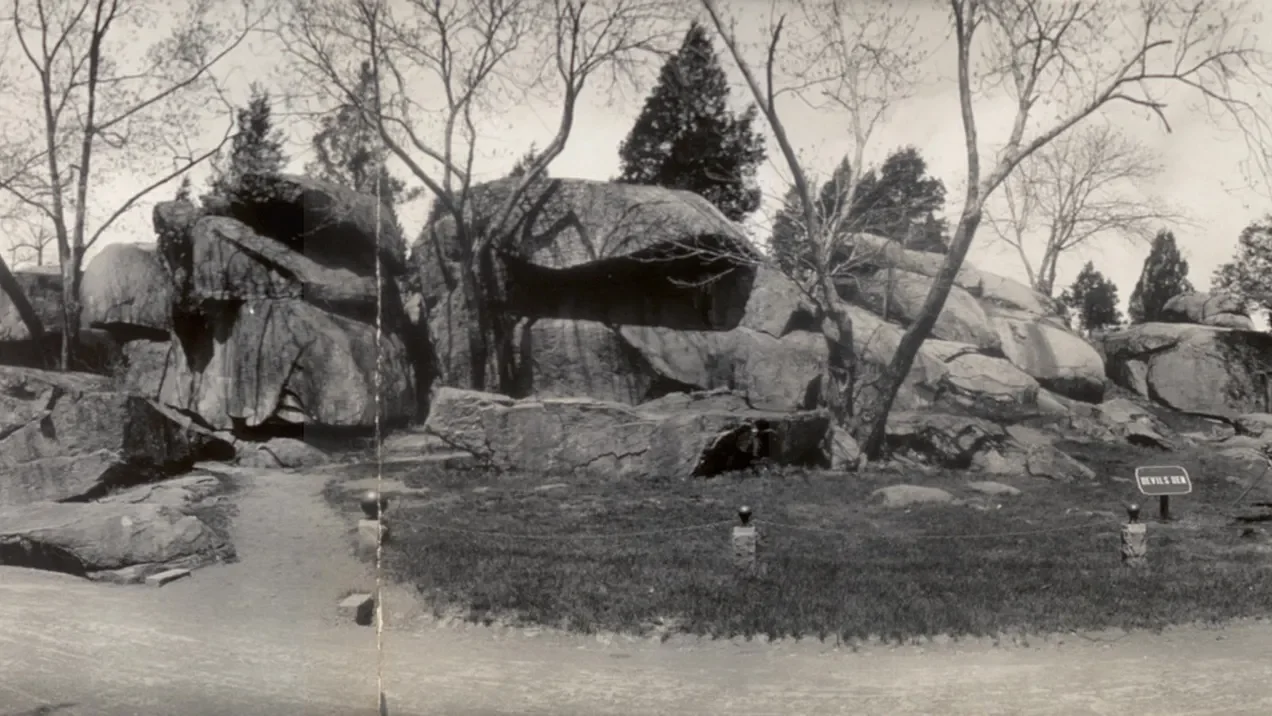
The famed “Devil’s Den” a rocky outcropping that became the site of carnage within Sickles’ front.
Sickles’ Corps was decimated over the course of the afternoon. Sickles was wounded by a 12-pounder cannonball around Trostle Farm, ultimately costing him his leg. The Union line was only saved by desperate action from reinforcements. Without quick work from Meade’s Chief Engineer, Gouverneur Warren, drawing units from George Sykes’ V Corps, Confederates could have swarmed over a wide-open Little Round Top.
By the end of the day, Sickles was removed to a field hospital, his corps under the command of General David Birney. His corps was effectively annihilated, taking horrific casualties. In the end, the ground Sickles refused to hold as ordered by Meade became the new defensive line.
Sickles makes himself the hero of Gettysburg
Daniel Sickles disobeyed a direct order from his army commander at Gettysburg. His army corps was decimated, and the Union Army came close to collapsing on July 2. Post-war historical analysis is mixed on the consequences of Sickles maneuvers at Gettysburg, but most see his insubordination as the cause of unnecessary destruction of his army corps. Had he held his original line, the Union victory would have been less costly and more complete.
Gettysburg, regardless of Sickles’ decision, was a much-needed victory for the Union Army. This glorious moment came at the hands of General George Meade, but if the commanding general were to get the credit, it was too much for Sickles to handle.
He embarked on a PR campaign to paint himself as the hero.
On March 14, 1864, while Sickles was still recovering from the loss of his leg, an “anonymous” letter appeared in the New York Tribune, written under the secret name of “Historicus.”
The letter was a gushing overview of Sickles’ actions on July 2. According to the author, the III Corps’ new line at Gettysburg saved the Union Army from complete destruction.
While the letter praised Sickles, George Meade was the actual target. George Meade. “Historicus” accused Meade of planning a retreat from Gettysburg. General Meade, portrayed by Historicus, shows a general who is somewhat aloof, failing to give clear or direct orders to Sickles, who then acts of his own volition to save the Union Army from being crushed.
Meade, along with some of his subordinates, wrote scathing rebukes of the letter, claiming much of the “anonymous” author’s accusations as false. One reply claimed the jabs were “pure invention.” Meade was under no illusion as to the letter’s author, stating it was written by Sickles or dictated by the Corps commander.
Sickles didn’t stop there. He doubled down. The General went before the Joint Committee on the Conduct of the War and trashed George Meade. Claims of Meade’s alleged cowardice and plans to withdraw were laid before the committee. According to Sickles, superseding orders on July 2 forced the action that would become the most important victory of the war.
(You can read more of the Joint Committee transcripts here. Using the search tab, you can search for Sickles, or Meade to bring you to their testimonies)
Meade’s supporters, many of whom were on his staff, stood by the Army commander. Meade’s staff wrote up the alleged retreat order as a contingency plan. He had to prepare for any possibility. It was his first time commanding an army. Reaching every corner of his army would take time. Rather than write commands on the spot, Meade had his staff draft contingency orders, rather than write them in the event of a needed retreat.
Sickles’ attacks on Meade gave the Joint Committee what it wanted. Here, a general, who was a civilian before the war, not one of those dreaded “West Pointers,” was the genuine hero of Gettysburg. Meade, a USMA graduate, was actually a coward, planning to hinder the war effort at such a crucial time. This drew Sickles even closer to the Radical Republicans, especially those who despised General Meade.
Sickles was the master of politics and PR
Sickles’ long and storied career in both politics and public relations (especially using the press to his advantage) was the basis for his post-Civil War heroic status. By the time of the Civil War, he had already mastered the political playbook, using the press to attack his political enemies and help him get away with actual murder. After gunning down Philip Barton Key in broad daylight, Sickles leaked the confession from his wife. Despite himself constantly cheating on his wife, the letter, amazingly, made him a sympathetic figure.
Warming up to Washington’s political leaders was almost as important a part of Sickles’ reputation as his wartime actions. He played along. By 1864, while discouraged, he wasn’t being put back into the line (hard to wonder why George Meade wouldn’t bring him back), Sickles worked alongside Lincoln to get the president re-elected.
Despite being a lifelong Democrat, he fell under the purview of the War Democrats, rejecting the most pacifistic hopes of the 1864 Democratic platform. The Democrats ran George B. McClellan as Lincoln’s opponent, a man who embodied the despised professional army officer class. Sickles publicly rejected the policies that McClellan ran on.
After the war, Sickles continued to beat the Gettysburg drum. He returned to a life of politics, but he was heavily involved in post-war veterans’ affairs. Politically, he aligned himself with Reconstruction policies, supporting the Republican stance in dealing with the postbellum South.
He was especially obsessed with the Gettysburg battlefield and his own legacy. For the rest of his life, he touted his insubordination as the reason for the Union Army’s most crucial victory. This coincided with his ongoing insistence that Meade was pushing the army to retreat from the battlefield.
He served on the New York Monuments Commission, ensuring the state was heavily represented at Gettysburg. He served a term in Congress after the war, where he took on preserving the Gettysburg Battlefield. While there was no Sickles’ monument placed at the battlefield, he spent the rest of his life claiming the battlefield itself was a monument to his actions, as he wholly believed it was his victory to claim.
Regardless of the truth or the implications surrounding his Day 2 actions at the battle, the war became the defining moment of his life. When Sickles lost his leg, he remembered the new army policy of collecting medical specimens and records, so he had his amputated, shattered leg sent to the Army Medical Museum. Sickles regularly visited the leg, which is still on display at the museum.
Up to the end, an elderly Sickles, wheelchair bound, made appearances at various veterans’ events and made his way to Gettysburg for reunions. Sickles died in 1914, at 94. To his dying day, Sickles lived with the belief that he was one of the war’s grandest heroes.
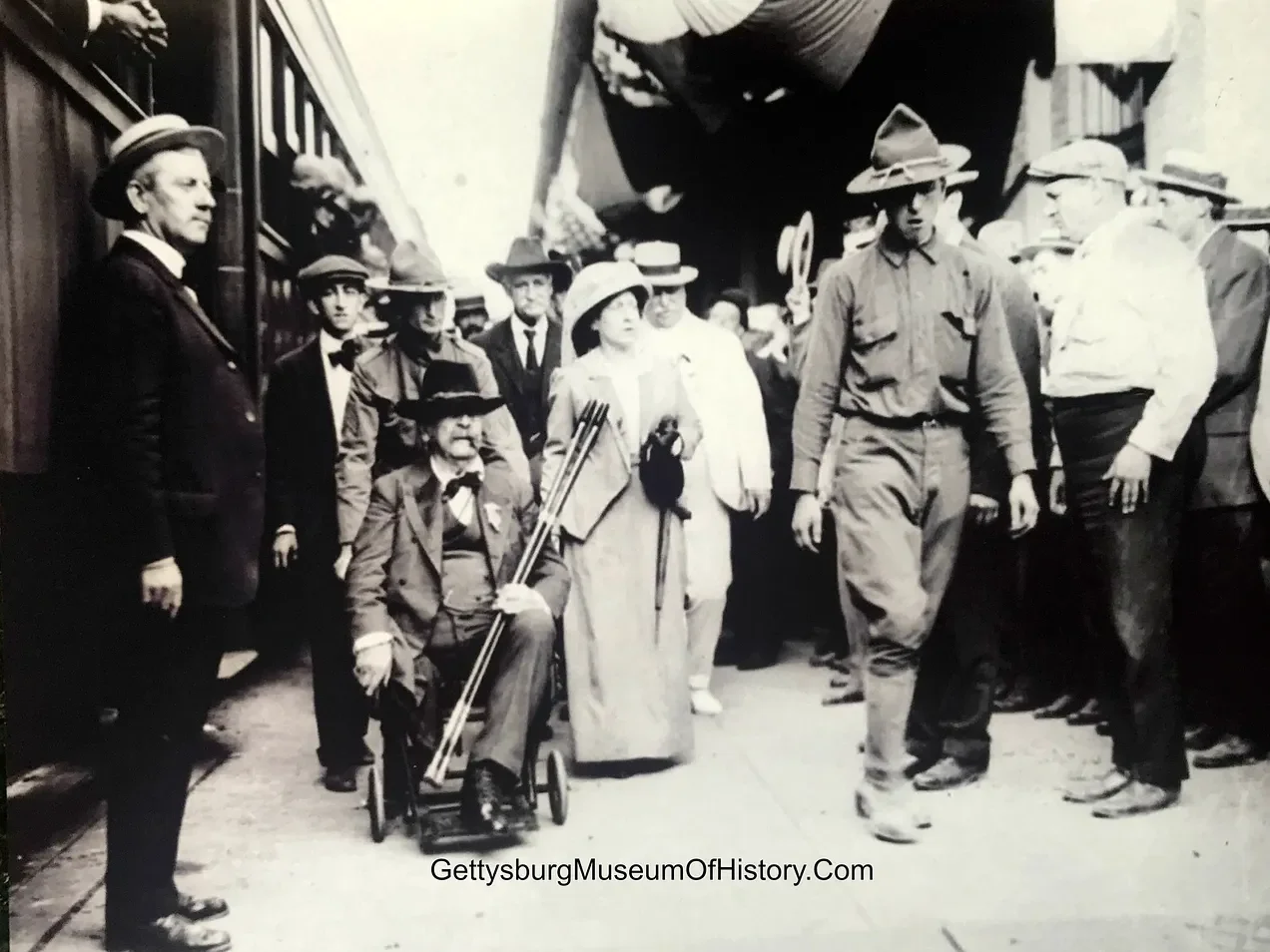
An ageing Sickles arrives for a Gettysburg reunion, a year before he died in 1914. Photo credit: The Gettysburg Museum of History
Conclusion
Sickles’ actions at Gettysburg have been the focus of countless books, articles, lectures, and analyses. There’s no way to know how the battle would have changed if Sickles had obeyed Meade’s order to hold his place in the line. Many historians, probably more do than don’t, believe Sickles put his men in unnecessary danger and could have saved thousands from being wounded or killed that day.
One thing we know for sure is that Sickles’ political career was a driver behind his Civil War legacy. He knew how to play the game perfectly and inflate his sense of importance or justify his actions. Clearly, he was not averse to painting his sins in a way to make them seem reasonable or just. He was so good at it that he literally used his skills to get away with murder. Despite acts that would have ended the careers of most normal men, Sickles always seemed to fall upwards.
Like this article? Want more like it sent to your inbox? Sign up for my newsletter here where you can become a free, or paid subscriber.
The world needs to learn history, now more than ever. Help me in my mission to educate by supporting my work here.