
The history finder newsletter 4/12/2026
Historical Sources-Books-Archives-Articles-Musings
Since I spend enough time every week frantically digging for historical sources, I figured it was about time to finally put my findings down in writing! Each week, The History Finder will highlight all the interesting things I’ve found throughout my historical travels and rabbit holes.
Books
I probably spend too much time obsessing over books, but for a historian, they can be up there on a list of essentials next to things like breathing, eating, and sleeping.
This week I’ve jumped into some new books. Next week…there will be more books! My favorite of the week so far is:
The Spotsylvania Campaign, edited by Gary Gallagher: Published in 1998, this book is a collection of articles written about the Civil War’s Battle of Spotsylvania Court House and the campaign surrounding it. The battle was one of the war’s bloodiest episodes in the earlier days of Ulysses S. Grant’s tenure watching over the Army of the Potomac.
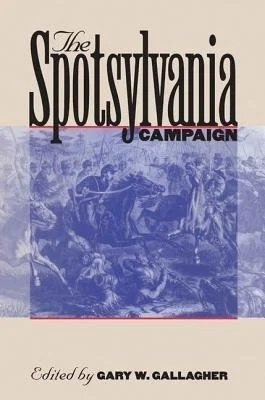
Available for purchase on Amazon, or check your local library. I was able to read this through my local library’s hoopla account. If you don’t know what that is, check out the amazing ebook resources likely offered by your local library.
The book isn’t an overarching narrative about this fascinating campaign. Instead, it’s a collection of hyper-focused topics within the battle itself. I love books like this, giving a new edge and nuance to studying these battles. If you’re interested in understanding the thought process of a historian, these books are a great way to get an insider’s view of how historians approach a topic.
This book includes the work of Gary Gallagher, William Matter, Gordon Rhea, Robert Krick, Carol Reardon, Peter Carmichael, and William Blair.
Rather than focusing on the bloody, overpowering action on parts of the battlefield, or just tactics, these articles aim to understand smaller parts of Spotsylvania’s infamous place in history. The focus is on things like tactics, command decisions, strategy, contributions of the soldiers and officers who fought there, and an article on how veterans remembered the battle and later told it.
Chapter topics include: How Robert E. Lee dealt with problems pertaining to his corps commanders, command clashes within the Army of the Potomac, problems with Union General Gouverneur Warren’s performance, new perspectives from fighting at the Bloody Angle, J.E.B. Stuart’s response to Philip Sheridan’s Richmond cavalry raid, the Battle of Yellow Tavern, where Stuart was mortally wounded, military effectiveness of both armies, the 15th New Jersey’s contribution to the battle and their ensuing move to commemorate the battle. The book has been eye-opening and offers great new research perspectives you can apply to other battles, wars, or topics throughout history.
Free (yes free!) books by the Center for Military History.
I have been excited by the abundance of publications produced by the Department of the Army’s Center of Military History. Just searching for anything published by the CMH gives you great, highly researched, authoritative books or articles on what feels like limitless topics.
I’ve been fascinated by the first Philippines Campaign of World War II, where the American and Filipino forces held out against the Japanese onslaught at places like Bataan and Corregidor. Louis Morton who wrote the army’s definitive book on the campaign was a historian who graduated from Duke University with a PhD in History in 1938. Serving through World War II, he later became the Deputy Chief Historian in the Office of the Chief of Military History (I know that’s a mouthful). Morton played a huge role in the preparation of American WWII official histories as the chief of the Pacific section.
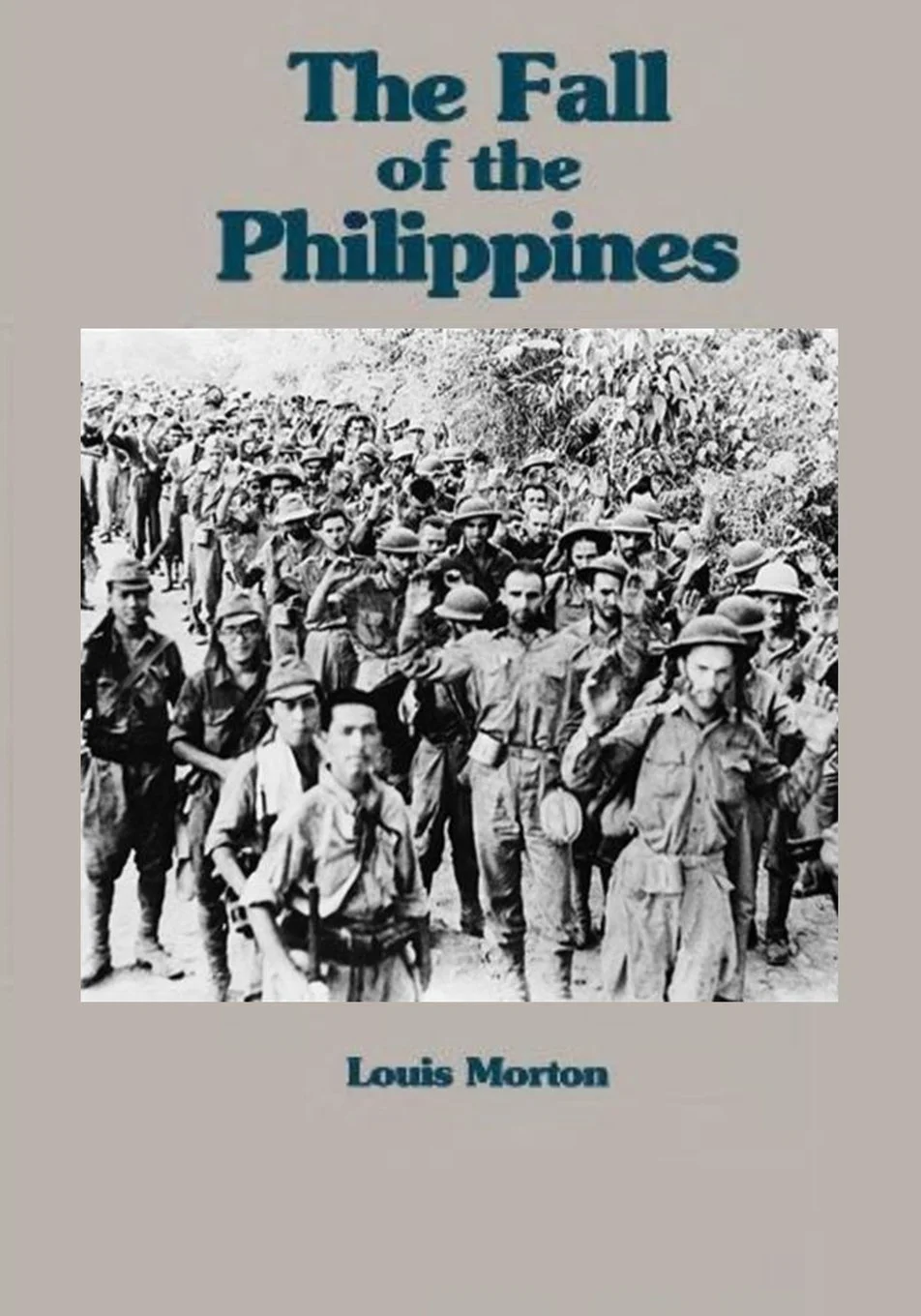
Louis Morton’s definitive book on the Fall of the Philippines
The Department of the Army’s Center of Military History has dozens of authoritative books on military history. You can download them from their website.
His contribution gave us 11 volumes of The War in the Pacific section of the United States Army in World War II, including the volume on the Fall of the Philippines (1941-42). Morton served as a historical officer in the Philippines and took part in the battle itself, later ending up as a Prisoner of War under the Japanese.
Read Morton’s book for free here via the Center of Military History website.
The first Philippines Campaign (1941-42) is a rather dark spot in American history. The US-Filipino forces there, under the overall command of the famous General Douglas MacArthur, suffered one of the worst defeats in the nation’s history. The defending force of some 150,000 men who were part of the United States Army Forces in the Far East held out for 5-months. They battled disease, lack of supplies, no outside support, and a superior enemy. They took nearly 146,000 casualties, including 25,000 killed. 100,000 were captured and forced to suffer through the brutal death march towards their prison camps.
This defeat was one overshadowed by the long war that followed. Little in the way of records made its way off the islands, leaving little behind for historians to work with. Louis Morton was able to piece together one of the most thorough and definitive narratives of the battle.
This is just scratching the surface of what the CMH publications have to offer. Since these are compiled and printed by the US Army Center of Military History, you can download them for free! Go to: https://history.army.mil/ and use the publications tab. Or, here’s the publications list if it’s easier for you: https://history.army.mil/Publications/Publications-Catalog/Publications-by-Title/
Take advantage of this!
Memoirs:
The internet allows us to access more resources than ever thought possible. Through online archives, so many books, articles, primary sources, etc are accessible for free.
**A quick note on memoirs. Always read with a grain of salt. Memoirs are often written in a way to make the subject come out smelling like a rose. Civil War memoirs are notorious for laying the blame on others, or taking undue credit, so always check it next to the official records, or reputable sources.
These memoirs from Civil War Confederate Generals and Officers are free to access from the links below:
The memoir of Lieutenant General Jubal Anderson.
Memoirs of James Longstreet. From Manassas to Appomattox: Memoirs of the Civil War in America.
Moxley Sorrel: A Confederate General who also served as General Longstreet’s Adjutant
General Edward Porter Alexander’s Memoir
General Richard Taylor’s memoir
This is just scratching the surface, but it should inspire you to go out and search for some more memoirs to keep the list going.
Sources
The American Civil War is one of the most thoroughly researched conflicts in history, and those who lived through the conflict left us an unimaginable number of sources.
The political angle of the Civil War meant people were likely to be held accountable, or at least questioned about various incidents during the conflict.
Enter the United States Congressional Joint Committee on the Conduct of the War, first established in December 1861. After the Union disasters at Bull Run and Ball’s Bluff, the radical wing of the Republican Party wanted a way to blame the war’s failures on Lincoln’s ineptitude.
Hearings held before the committee were harsh, accusatory, and intended to make the Lincoln administration look bad. Hundreds of meetings were held, always in secret, where Union commanders were constantly put through the wringer with the intent to find a suitable scapegoat for Union Army failures.
The Radical Republicans wanted a quick, fierce, and thorough destruction of the Confederacy, and failed to understand why it wasn’t happening. They were averse to the professional military leaders, especially those who graduated from West Point and wanted nothing to do with military theorists, science, or reasoning. Instead, they were looking to prove the ineptitude of Union military leadership.
In the printed records from the committee, we get to hear from some of the Civil War’s most famous voices, including men like George B. McClellan, George Meade, William Sherman, and others. You should see this through the lens of what it’s supposed to be: an opportunity to make these men look bad, but there is value in their testimony. We can see what these soldiers thought about the war, the army, why they did the things they did, and what the political climate was like in the Union.
You can see all the published records here: 1863 (http://name.umdl.umich.edu/ABY1233), 1864 (http://name.umdl.umich.edu/AAW7861), 1865 (http://name.umdl.umich.edu/ABY3709)
Articles
This week, I decided it was time to get to know one of the Civil War’s forgotten generals, Union General Irwin McDowell. McDowell commanded the Union Army during the disaster at Bull Run. Looking for a new angle, I wanted to understand whether the general was doomed to fail from the beginning, or if we can lay blame for the defeat on him.
Check out the article here: https://www.historyonawhim.com/articles/mcdowell-at-bull-run
That’s it for this week. Check back again next weekend for another newsletter. I aim to inundate you with new sources, books, ideas, and things to fulfill your passion for history. If you know someone who would be interested in my stuff, please share it with them. Things are in their infancy, but my goal is to inspire a passion for history while giving everyone the tools needed to understand and learn it.
Please subscribe if you’re new. Check me out on the website www.historyonawhim.com, or substack here: https://jesseroberts.substack.com/. You can receive my history content updates sent right to your inbox.
Thanks for checking this out!
Til next time,
Dr. Jesse Roberts, PhD.