
The History Finder 4/21/2026
What Historical Sources I’m finding this week:
This newsletter, if you’re new to what I do, or what this is about, is really just a fun way to share new history sources, websites, archives, etc. I spend so much time doing research, I’m always amazed by what I find in the way of new sources. My list of resources is growing beyond anything I could fit in a newsletter like this, so I’m going to give you a little bit each week.
As for what I’m personally working on right now, I’m focusing on the American Civil War as of late. Last week, I did some research on one of history’s forgotten military figures, General Irvin McDowell. For those who don’t know, McDowell commanded the Union Army’s largest army in 1861, leading them to their first major battle (and defeat) at the First Battle of Bull Run, July, 1861. I wrote an article about it last week; you can read it here.
This week, I’ve been really fascinated by the many clashing personalities within the Union Army of the Potomac, especially at the higher level of command.
On June 28, 1863, General George Meade was tapped to become the AoP’s fourth commanding general of the Civil War. This was just days away from the Battle of Gettysburg. Meade was actually fifth on the list of options (due to seniority) and was only given the job after the first choice, John Reynolds, turned it down. Complicating matters was the fact that many of Meade’s corps commanders actually outranked him. This made for a lot of interesting dynamics to study.
Less than a year after Gettysburg, a new commander comes into the picture, Ulysses S. Grant. While Grant kept Meade in charge of the Army of the Potomac, there were plenty of personality clashes there, and among the various commanders. I’m putting my research together to write an article that’ll be done sometime this week. You can see that on my website www.historyonawhim.com or subscribe to my Substack.
Okay, now onto sources!
As a quick aside on why so many Civil War sources: I know a lot of my sources are related to the American Civil War. Not every single issue of my newsletter will be this way! Right now, as I’m doing a boatload of research on the war in a professional capacity, I’m discovering a lot of these sources. There will be plenty of future information on all other conflicts throughout modern military history (1800s-present).
Databases: Newspapers- Chronicling America by the Library of Congress
Newspapers are often seen as a “primary source.” Meaning, someone was actually there to witness the event and recount their story, then wrote about it. It’s not necessarily the case that every article you read from the past is a primary source related to the story they’re writing about. So, it’s best to try to find a story from someone who was there, or a printed interview someone who was.
Now with that out of the way.
The Library of Congress has an incredible database called Chronicling America. It is one of the largest historical newspaper databases in the United States. It’s something you can get lost in for hours, especially if you’re like me (just a little bit too obsessive about anything you find interesting, hence why my site is called History on a Whim.)
Last week marked the anniversary of the bombardment of Fort Sumter, so for a Facebook post, I did some searching for newspaper accounts of the attack.

You can read my Facebook post here. You should also give me a follow on there! Help me grow my new account.
Using the database can be a bit tricky at times, just like any historical database, but there’s a great guide provided by the LOC here.
When using the site, you can see the search bar above with a dropdown menu next to it that says “this collection.”
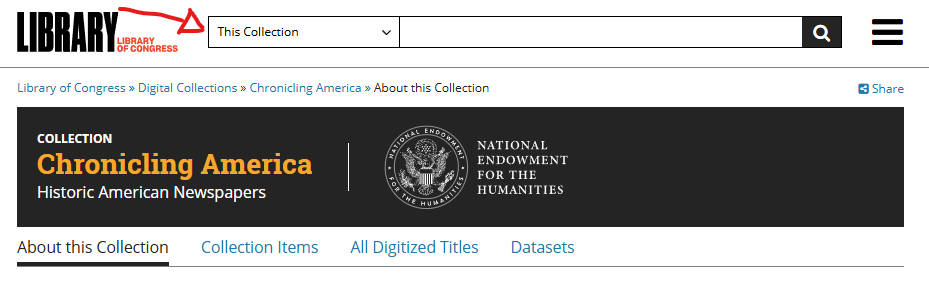
Put your search terms in there. From there, you can narrow it down by date of publication on the left-hand side. For instance, if I wanted to search for newspapers publishing articles about George Meade’s rise to commander of the Army of the Potomac, I narrowed it down to 1860-1869.
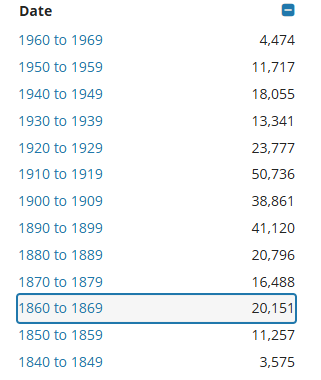
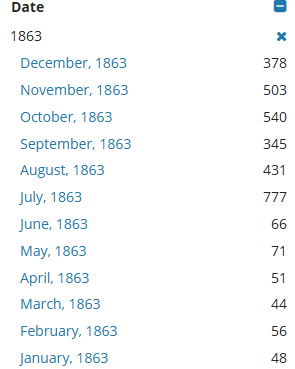
I know Meade was promoted on June 28, 1863. As you can see in June there were 66 mentions of him, then a month later it jumped to 777!
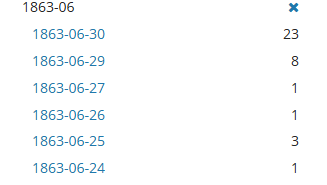
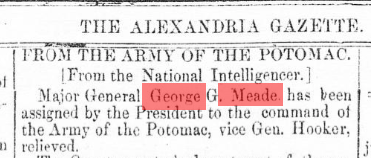
From there, I see that on June 29 and 30, mentions of Meade jumped to 8 on June 29 and 23 on June 30, so that’s likely the first mention of his promotion. Here’s what I found:
On June 29, 1863, the Alexandria Gazette broke the news about Meade’s promotion.
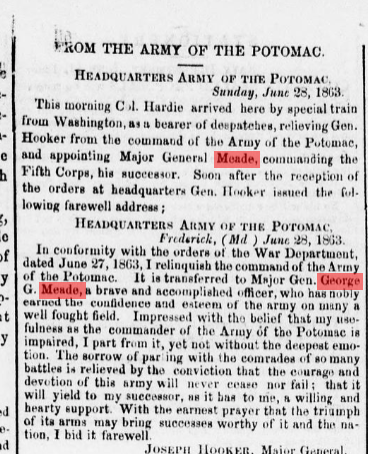
This second one, from June 30, is from the Washington D.C.-based National Intelligencer and includes the statement made by General Joseph Hooker, the previous commander of the Army of the Potomac.
This guide is rudimentary, but you can see it’s pretty easy to narrow down your search. The search tool automatically includes the highlighted name “George Meade,” so you don’t have to scour each paper trying to find it.
I’d love to see what anyone else finds using the Chronicling America database. It can be on any historical topic. You can share it with me on my Fort Sumter post here. Just give me a screenshot in the comments.
Sources: Confederate Veterans Magazines & Magazines of the Time Period
The Civil War became such an integral part of post-Civil War culture that veterans’ groups and publications became commonplace. There was a desire to learn about and remember the war, especially by those who fought. Compared to earlier conflicts, the rising rates of literacy, accessible publishing, and the massive number of veterans meant more stories were left for future generations. Compared to other wars throughout world history, the Civil War gave us more sources from boots on the ground, not just military leadership.
Veterans’ magazines recount Civil War battles, campaigns, and camp life from the rank and file up to the highest levels of command. Contemporary magazines from the era are another great way to find Civil War accounts.
Confederate veterans were especially prolific in their post-war magazine publications. For whatever reason, the Union veterans organizations like the Grand Army of the Republic didn’t create a magazine or periodical as their southern counterparts did. There were plenty of publications out there printing Union Army veteran accounts. Last week, I included the Military Order of the Legion Loyal to the United States (MOLLUS). MOLLUS participants were Union Army veterans who presented papers to their various branches, and you can read most of those online.
Here are some publications I found:
Confederate Veteran Magazine
Confederate Veteran magazine was published from 1893 to 1932. It was dedicated to…you guessed it…Confederate veterans. The magazine was published every month over all those years. The University of Pennsylvania has digitized all 40 volumes on the Internet Archive. Each volume contains the twelve magazine issues.
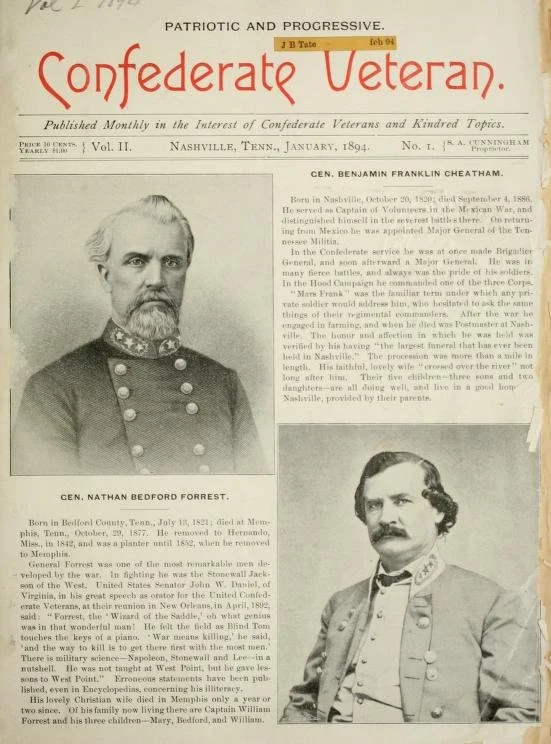
The magazine started out as a way to raise money for a monument dedicated to Jefferson Davis, the President of the Confederate States of America. It later became the mouthpiece for the United Confederate Veterans. It was a hub for the “Lost Cause” movement that permeated the post-war South.
The magazine is filled with veterans’ stories and other writing that gives a look into post-war sentiments and beliefs.
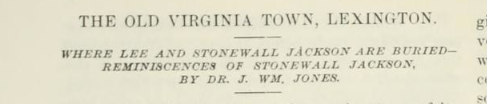
From volume 1, issue 1 of Confederate Veteran featured a memorial account of Stonewall Jackson by Dr. J. Wm. Jones. Articles similar to this are in most issues of the magazine.
Or, they feature historical accounts, letters, and journal entries like this article here:
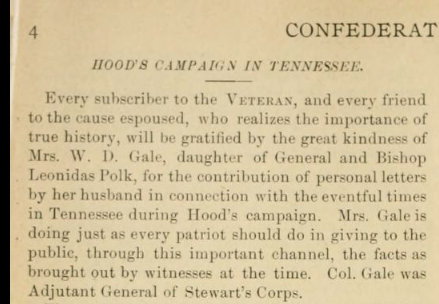
This article featured a letter from Colonel Gale, who was adjutant in General Alexander P. Stewart’s Corps. Gale was present during General John Bell Hood’s disastrous Franklin-Nashville Campaign (September 18- December 27, 1864). These magazines are filled with similar accounts or stories.
The Southern Bivouac Magazine
This “little magazine” was published by the Southern Historical Association of Louisville. It was started by former Confederate army officers, notably Basil Duke, as a way to share papers presented to the Southern Historical Association:
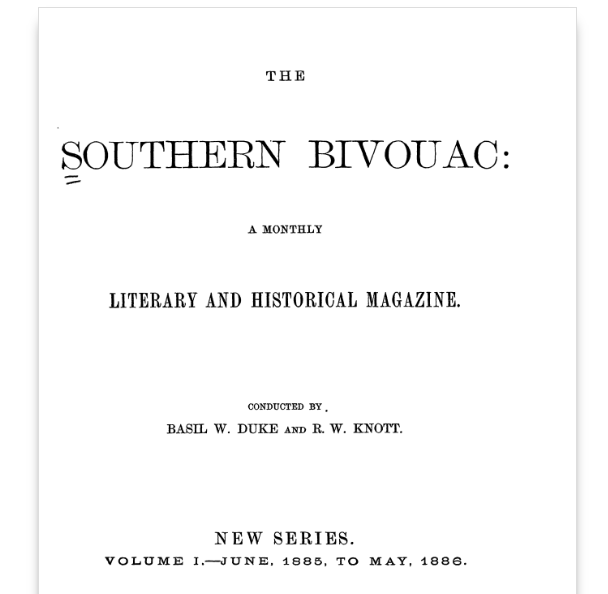
The historical association received so many papers that they couldn’t possibly present them all at their meetings, so they decided to publish them instead.
The Southern Bivouac differed from Confederate Veteran in some ways. The Southern Bivouac was part of a movement to professionalize the study of history in the South and promote something more intellectual than Confederate Veteran. The Southern Bivouac functioned more as a professional literary and historical journal.
The Southern Bivouac didn’t push the “Lost Cause” narrative as intently as the Confederate Veteran. According to historian Gary Gallagher, the Southern Bivouac was more conciliatory towards the North. It certainly promoted the Confederate fighters as brave, but it was less about the nobility of the Lost Cause.
Magazines and articles are great resources for finding primary sources. Use them.
When it comes to finding sources on any area of history, the sheer number of resource types can be overwhelming. Something you will learn over time, when it comes to studying or researching history, is that experience makes a huge difference. Early on in the dissertation writing phase of my PhD, I was getting discouraged about my topic. I wanted primary source accounts that were becoming harder and harder to find, until I stumbled upon a magazine article where a Civil War soldier recounted his story. Then, while searching, I found more and more of these smaller first-person accounts in magazines, articles, or papers presented to the various veterans’ organizations.
I think magazines and articles are easily forgotten, shrouded in the shadow of things like memoirs, books, or the eternal supply of official records from various military conflicts, especially the Civil War. Once you realize how many magazine articles, presentations, or veterans’ magazines/journals there are out there, they’ll become part of your usual search routine.
If you don’t know where to begin, do a search on various publications at the time, or look into cultural aspects of the war you’re researching. Really, from about the 1800s up to the Vietnam War (the era I study), war was somewhat glorified. It was a part of popular culture. If you’re looking into the First or Second World War, look into pulp magazines. These are often filled with over-the-top, sensationalized presentations of war, but they were filled with real war stories. Just look at sites like the Internet Archive, dig into their collections like the Pulp Magazine Archive.
If you’re still lost, use bibliographies! Non-fiction books almost always come with a bibliography at the end. Some authors do an essay on their sources, rather than an all-out bibliography, but use these to help you find sources. You don’t have to use the sources they did, but you can see which kind of publications printed primary source accounts.
Keep a list or database! Always save a source. Keep a nice big list, something that will grow throughout your life. I keep an ever-growing database of new sources, including books, articles, magazines, archives, official records, etc, and organize the sources by various tabs or databases. If you find a magazine or journal, then save it! Many of these are available online, so you can easily save a link.
Websites: Some great websites that you’ll love.
International Encyclopedia of the First World War-1914-1918 online.
This is a global project featuring thousands of articles, images, and a gargantuan bibliography all related to the First World War. I really love their list of World War I websites. It can be frustrating to search for good websites on any conflict. Often, you’ll get dragged into clicking through dozens of search results pages to find them. This list is nicely organized by topic, country, etc.
Incredible doesn’t begin to describe this site. It looks a little dated, like something from 2004, but who cares? It is one of the most comprehensive websites on Civil War sources I’ve ever seen.
Civil War Digital neatly organizes its sources by resource type or topic. If you want to spend the money, they conveniently offer various collections for sale. If you purchase anything via PayPal, they’ll send you those sources on a flash drive. Do you want a searchable version of all the Civil War Official History volumes? They have it. Do you want a comprehensive collection of books and papers about Civil War Medicine, including the official medical history of the war? They have it, along with much, much more.
Now, you don’t have to purchase these sources if you want to see them. Everything they list is available if you search for it, but buying it from them saves you the work, and you can quickly and conveniently search them.
Civil War Digital gives you a list of every source they have available. Even if you’re not going to buy anything, their lists are the most exhaustive I’ve ever seen. Use them! On each tab, you can click on the included sources and see what’s included. If you search items on the list, you can find them accessible online. As a bibliographic aid, this website is one of the best. Definitely give them your support. Share their site, and if you’re interested, purchase some of their digital sources, then you’ll have them forever without packing your hard drive full of them.
I’m not affiliated with them in any way, so don’t think I’m trying to push you into buying anything. I just really love this site and appreciate the effort it takes to build a site like this. The site was started over a decade ago, and it’s still growing. That’s how long it takes to create a source list like that.
Books: Free & Authoritative Books
The United States Army Center of Military History was founded in the midst of World War II. The CMH traces its history back to the writing of the Civil War Official History. It was founded as a way to accumulate records related to World War II. The CMH does comprehensive studies on a variety of topics, covering every major American conflict, different battles, and the focus of history.
Guess what?
These are completely free to read. They’re also authoritative.
The books published by the CMH are used to inform future generations about warfare, tactics, strategy, logistics, and anything else pertaining to warfare. They make use of official records, oral histories, and artifacts to write books and articles that anyone can access.
Just as a disclaimer, these books are all focused on the United States Army. There are official histories written by other departments out there, but that’s a topic for another day.
You can get access to these books online and download them for free here. This link includes access to the official US Army histories of both World War I and World War II.
There are a lot of fascinating books you can read here. Topics include: military medicine, logistics, battles, and operations. The CMH did thorough research on topics like Germany’s World War II operations, using former German soldiers and officers to inform their research. They have a definitive series on the history of the United States Army Medical Department. This is just scratching the surface. You’re going to have to go get lost in this collection yourself!
Just click on a title you’d like to read and download the PDF. Now, if you don’t want to download a PDF, most of these books are available on the Internet Archive, where you can read them on a browser. Or, if you’d rather have the real thing, you can order physical copies on Amazon, but you’ll have to fork over money to get those.
That’s all for this week.
I know I’ve hit you with a lot. Have fun getting lost in history. Remember to keep track of all your history sources! I’ll be back next week with more.
If you want more of this every week subscribe below or sign up for my free Substack newsletter here. On Substack, you’ll get The History Finder Newsletter along with my history articles.
Please consider supporting my work! Or, you can do this by sharing my site.
Dr. Jesse Roberts